
Jamaica, Land We Love
Jamaica’s journey has been turbulent, and that reality shapes how we talk about privilege. In a country where people face different levels of hardship, the topic is uncomfortable. Many Jamaicans struggle to admit they had advantages others didn’t. Even so, this is a topic worth exploring and a discussion worth having.
Privilege simply means having access to opportunities or comforts most people never had. Were you privileged? You’ll know by the end of this article. And because Jamaica has changed rapidly over the past six years, this article will focus on the period from 2000 to 2015. During that period, we had high rates of unemployment, several IMF deals, and spiralling crime.
You will notice that I may mention/compare the previous situations in this country to what is happening now. This helps to paint a picture of how things may have changed.
A Stable Job
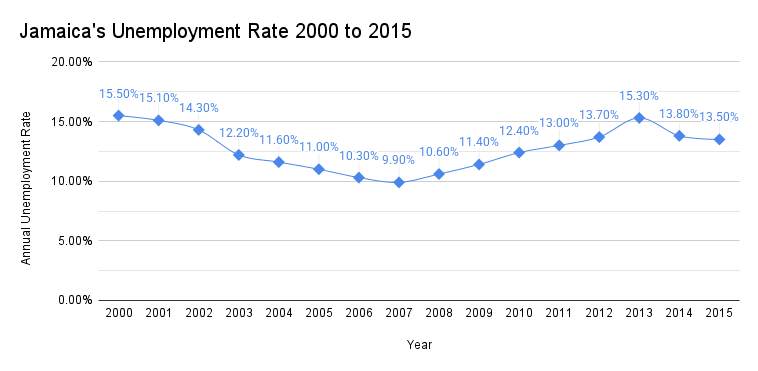
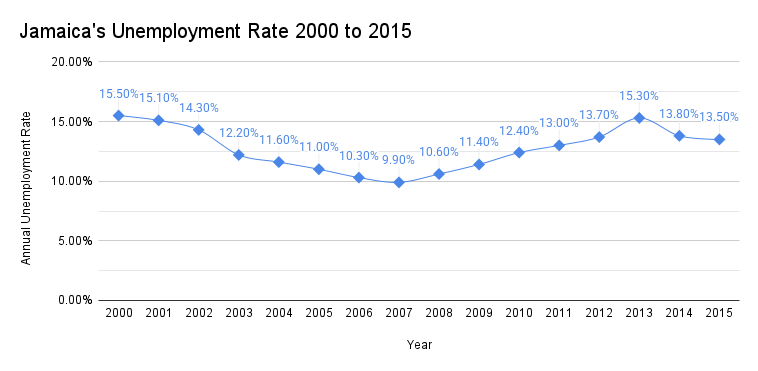
Jamaica has suffered from high unemployment for decades. Here’s some context: double digit unemployment figures are considered high. Now, many people hear about the unemployment rate yearly, but they don’t really know how it impacts us. A Percentage change up or down in this rate can mean that 100,000 persons have either lost or gained jobs.
There are 1000s of Jamaicans who wanted to work but just couldn’t get a job due to the high unemployment rate. If you or a parent had a stable job for over a decade, then you were certainly privileged.
A Job here refers to a standard ‘9 to 5’ or similar. Being employed for a long period of time aside, there is also the matter of underemployment. Due to the lack of available jobs, many Jamaicans were ‘stuck’ in their current roles. This often meant sticking to a job that didn’t pay well or staying in the same role forever.
The people who not only had jobs but also gained promotions and earned well were considered to be rare!
A Nuclear Family
According to a UN report, the rate of single female-headed households was 47.1 percent in 2015. Approximately half of the country’s population grew up ‘without a father’. A couple of things could now be asked. Is it possible that the numbers were higher than reported? How many children even know who their father is? Is the father in the household and simply not contributing? Did the mother have all the children for 1 man? Is the mother certain who the father is?
The last question raised is linked to another issue – Paternity Fraud. You are probably wondering why this is important. Fathers finding out that the child/children aren’t theirs often leads to the destruction of the Nuclear Family. Aside from the fatherless epidemic that Jamaica faces, we also have a ‘Jacket Epidemic’.
Note Well: Jacket is the Jamaican term for when a woman has a child for another man. The woman knowinlingly/unknowinly tells a man(who isn’t the father) that he is the father.
The main scope of this article is from 2000 to 2015; however, some recent data uncovered by 876_DNA paints a clearer picture. 1 out of every 2 tests conducted showed that the individual was not the father.
A Nuclear Family consists of two parents and their children.
It should now be clear that anyone who grew up with an active and present father was certainly privileged. I won’t get into the importance of having a father in the home, but here’s an excerpt from the U.N. report referenced earlier.
“The absence of fathers has a significant impact on the family as a whole, but particularly impacts girls’ and boys’ development, as they grow up with anger, resentment, and a lack of positive male role models. One study from Jamaica links the lack of parental figures with delinquency and weaker educational attainment.”
Never Taken Public Transportation
Our public transportation system has been bad for a very long time. Nonetheless, most people had no choice but to take a bus, taxi, etc. Those who had the resources avoided taking public transportation. This ranged from being driven to school, to getting rides everywhere from their parents/guardians. Some students drove themselves to school as soon as they turned 18.
Why is this important? There have been several abductions, car crashes, and incidents surrounding/related to public passenger vehicles(PPV). Some Jamaicans, particularly women, have an innate fear of being abducted. Add this to the rampant reckless driving, and you can see why many would prefer not to take a taxi. Some PPV crashes resulted in minor injuries, serious injuries, and, in some cases, fatalities.
Of course, if people could, they would avoid public transportation. Unsurprisingly, as the economy improved, more Jamaicans bought cars. The Prime Minister has stated that the number of cars on Jamaican roads has doubled in the last 8 years.
Owning A Home
Home ownership has long been a difficult goal for many Jamaicans. The Jamaicans who legitimately owned a home were seen as fortunate. Home ownership here refers to having the title and legal documents associated with the property. Many Jamaicans built a home on land that is neither owned by them nor do they have the right to be there. Squatting has been a major issue for decades. The following is an excerpt from the 2019 Draft National Housing Policy:
‘On the other hand the UTech/SALISES Survey (2009) revealed that: 64 per cent of households owned their homes (44 and 20 per cent with and without titles, respectively); 20 per cent resided in private rented accommodations; 3 per cent leased dwellings; while 10 per cent were living rent-free.’
If I were to truly go over all the National Housing Trust(NHT) issues, it would take up the majority of this article. However, it’s important to go over a few long held complaints. One of those complaints is that NHT has not met the housing demand of the nation. This article from 2014 stated that approximately 75% of the contributors were not benefiting. There were 444,000 contributors and only 101,000 mortgagers.
It should not come as a surprise to you that some people wanted the NHT contribution to be optional. After all, why would you want to pay for something that you aren’t benefiting from? This demand for housing units still exists today! Those who qualified for the NHT loans and got a house were certainly privileged.
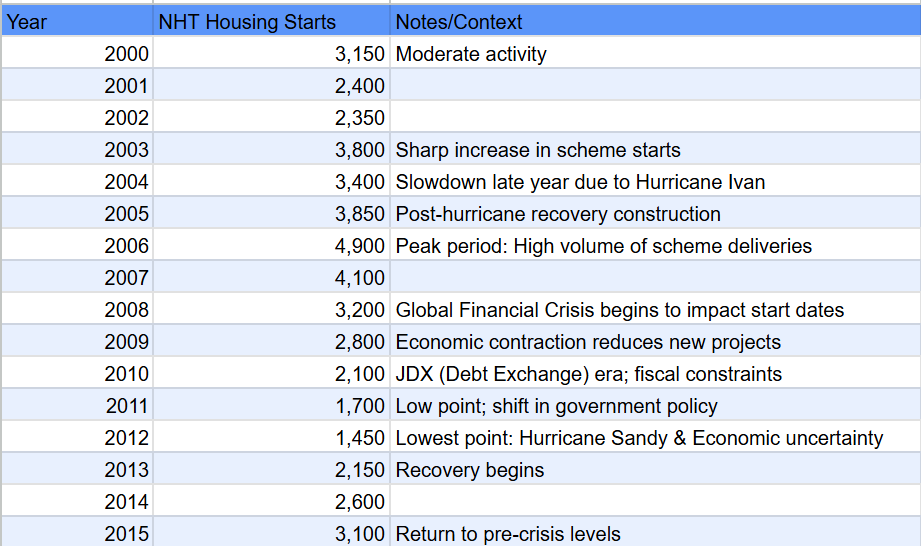
Note Well: A housing start is an economic indicator that counts the number of new residential construction projects that have begun during a specific period.
Even today, the NHT has yet to fill the demand for housing solutions. According to the Prime Minister, we have a deficit of 150,000 houses in Jamaica.
No SLB Needed For University
Financing university was a tall task for many Jamaicans. Even going the Student Loan Bureau(SLB) route would require you to have 2 guarantors. If you were able to fund university without using the SLB, then you are surely in the minority. Jamaica’s poverty rate fluctuated between 16.5% and 21.2% from 2009 to 2015. Just to provide a bit more context, a poverty rate above 10% is considered high, and 3% or below is considered low. Let’s say, for example, the poverty rate is 18%, which means that 18 out of every 100,000 are living below the National Poverty Line.
Add that to the high unemployment mentioned prior, and the lack of nuclear family households. What you end up with is a grim picture. Most people had no choice but to use the SLB. The main issue here is – what if you didn’t have anyone who would qualify as a guarantor? Tertiary education would be difficult to obtain, and it certainly was for many. To be a guarantor essentially meant having payslips. This would, of course, require a job, which wasn’t easy to get.
Let’s say you got through for SLB and they paid the tuition. There is still the matter of miscellaneous fees, food, transportation costs, and other hidden costs. These fees were covered personally by the applicants.
Note Well: In the 2025/2026 budget debate, the Minister of Finance announced a few changes to the SLB. Aside from tuition, the loan would include housing, books and supplies, the cost of a laptop, and a stipend for meals(and transportation). This should commence in the 2026/2027 financial year.
Travelled Overseas
Being able to travel overseas was a big deal. Being able to travel out(not to migrate) and return means you were better off than most. Going to ‘foreign’ was a big deal and a major status marker. Plane tickets were expensive, and most households lacked the disposable income for international trips.
Jamaicans often refer to foreign as America.
People who travelled abroad, whether for school, work, or leisure, were widely seen as “well-off.” Returning with foreign goods or stories from overseas only reinforced that perception. Some Jamaican people have the reputation of being ‘frightened for foreign goods’. Adults and children alike would light up if you ‘carry dung’ goods for them.
Internet At Home
Step back to the golden era of the internet cafe. Dimly lit rooms were filled with adults checking email, teenagers playing games, and so much more! It was a time when smartphones weren’t as common and home internet was rare. Just thinking about this age brings back all kinds of memories.
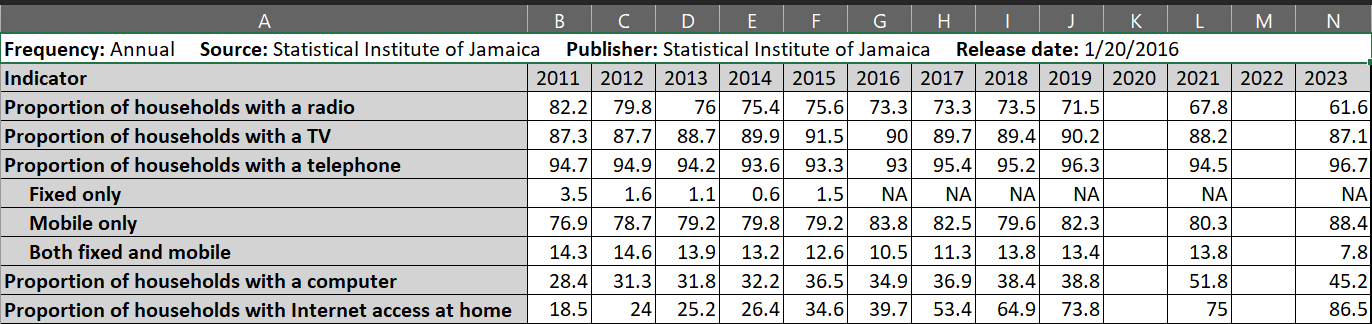
I’d say the golden age of the internet cafe(and gameshop) was between 2005 and 2015. I will refer to this as the ‘golden decade’ going forward. Data from STATIN shows that in 2011, only 18.5% of households in Jamaica had internet access at home. Access to the internet at home was a Luxury that only a few Jamaicans enjoyed. A majority of the population had to visit internet cafes and public access points.
Luckily, things have significantly improved since then. In 2023, the rate was 86.5%, a significant improvement from 2011.
Private & Overseas Schools
Most Jamaicans attended public schools due to financial constraints. Public schools in Jamaica are ‘free’; however, parents still pay an auxiliary fee. That auxiliary fee can cover things like registration, extracurricular activities, etc. Basically, it’s a fee to help fund certain school related activities. It shouldn’t be a surprise that many parents could barely pay that fee. Sending a child, or several children, to school was a challenge.
In 2015, 8.522% of primary and 1.784% of secondary school students were enrolled in private schools. Those stats paint a clear picture that only a few privileged Jamaicans could afford private school. These schools would allow students to connect with others who are well off. The teachers and teaching environment would allow for better results.
So how much does it cost to attend one of these private schools? Due to a controversy in 2020, we got an answer. Hillel Academy’s school fee ranged from 224,000 to 448,000 per term. Accounting for inflation and rising operational costs, the school fee has undoubtedly increased since that time.
Local private schools aside, there are Jamaicans who attended university overseas. This is a privilege accessed by a small percentage of the population. This shouldn’t be a surprise, after all, funding the local university studies was a behemoth task for many.
Peacefully Stay Home After 24
As soon as some Jamaicans turn 18, they have to find a job immediately. Why? Households cannot afford to fund school anymore. There is also the belief by many Jamaican parents that once you’re an adult, you are no longer their responsibility. This leads to young adults being forced out of the home.
Some end up taking low-paying jobs just to support the family. Some are more fortunate as they get to attend university. Once university is done, some get kicked out. Now, there are, of course, cases where people go through university and have the option to stay home as long as they need. This part is kind of tricky, though. The home may not be suitable for staying.
Your parents might constantly ‘invade your privacy’, the house may be too noisy, you may have outgrown your room, and elements in the community might try to harm you. There’s a long list of reasons, really. Needless to say, those who can peacefully remain home after age 24 are privileged.
Why did I choose age 24? Well, I used the ‘happy path’ which assumes you were allowed to finish university. This means parents supported you in whatever way they could until graduation.
Not Affected By Crime
Crime! An entire article could be written on how crime has affected educational and other outcomes. This one issue has been a plague in Jamaica for over 3 decades. Due to the consistently high murders per capita, Jamaica was unofficially crowned the murder capital of the world. Our murder rate peaked in 2005 at 62.5 per 100,000. Let’s put that into context. The average per capita murder rate globally back then was around 5 to 8 per 100,000. This placed us around 8 times above the global average!
Crime has touched many Jamaicans all over the country in some form or the other. There were entire communities under siege. However, there are people in this country who, luckily, were never affected by crime.
Some families could afford to move from ‘problematic’ communities. Some families hired private security. Some families never needed to put up a fence or get a guard dog due to living in certain communities. Crimes affected one section of society more than the other.
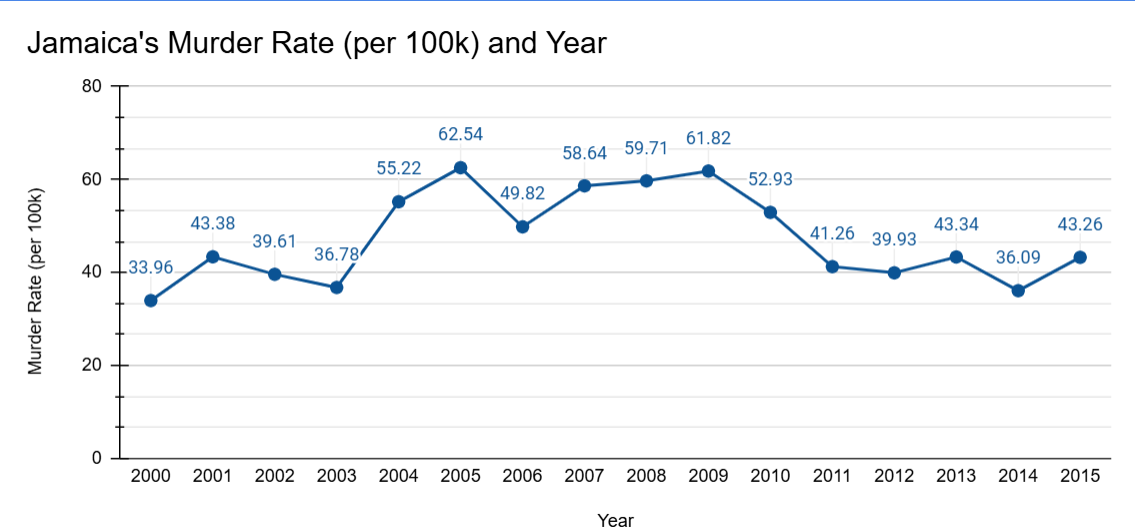
There has been some hope recently regarding crime in Jamaica. Our current stats show a downward trend over the past 2 years. Up to the end of October, we recorded the lowest monthly murder tally in 25 years. If things continue as is, we could end 2025 with less than
Were You Privileged?
How many privileges did you tick off? Was there anything said here that surprised you? Regardless, it’s important to note that being privileged isn’t a bad thing. The issue appears when people are in denial about the advantages they had growing up. I included recent data to show that things have greatly improved.
We all want better for ourselves, family members, etc. So if the money/resources were available, I’m sure more people would, for example, send their children to private school. The improvement in the economy means that more students are attending private school, more people have internet at home, more people have a stable job, and so on.
Some issues are more cultural than financial. Our culture ‘encouraged’ men to have children with multiple women. Communities pressure young men who are ‘still gelding’. There’s also the issue of songs(and our culture) that promote crime and getting rich quickly. Men will opt to join a gang or engage in lottery scamming so they can drive a ‘beast’ early.
Note Well: Gelding refers to Jamaican men who do not have a child as yet. This term is used mockingly in certain, often poorer communities. A beast is the term ascribed to powerful and/or fast cars. The term is a bit more recent, however, the goal os having fast cars, houses and many women remained the same over the years.
What are your thoughts on this topic? Is there a privilege that you don’t see listed? Based on this article, it’s clear that certain items are no longer associated with being privileged. Regardless of your views, I look forward to hearing your thoughts in the comment section.
Currently, The Republic Post is conducting a survey on Renting in Jamaica. If you or anyone you know rents, please fill out this form or send it to them. Jump to Survey
The post What Is Privilege? A Jamaican Perspective appeared first on The Republic Post.
